The Minister of the Interior shall be Superintendent-General of Indian Affairs, and shall be governed in the supervision of the said affairs, and in the control and management of the reserves, lands, moneys and property of Indians in Canada by the provisions of this Act. [bold and highlighted].
Article 2 of the Indian Act 1876
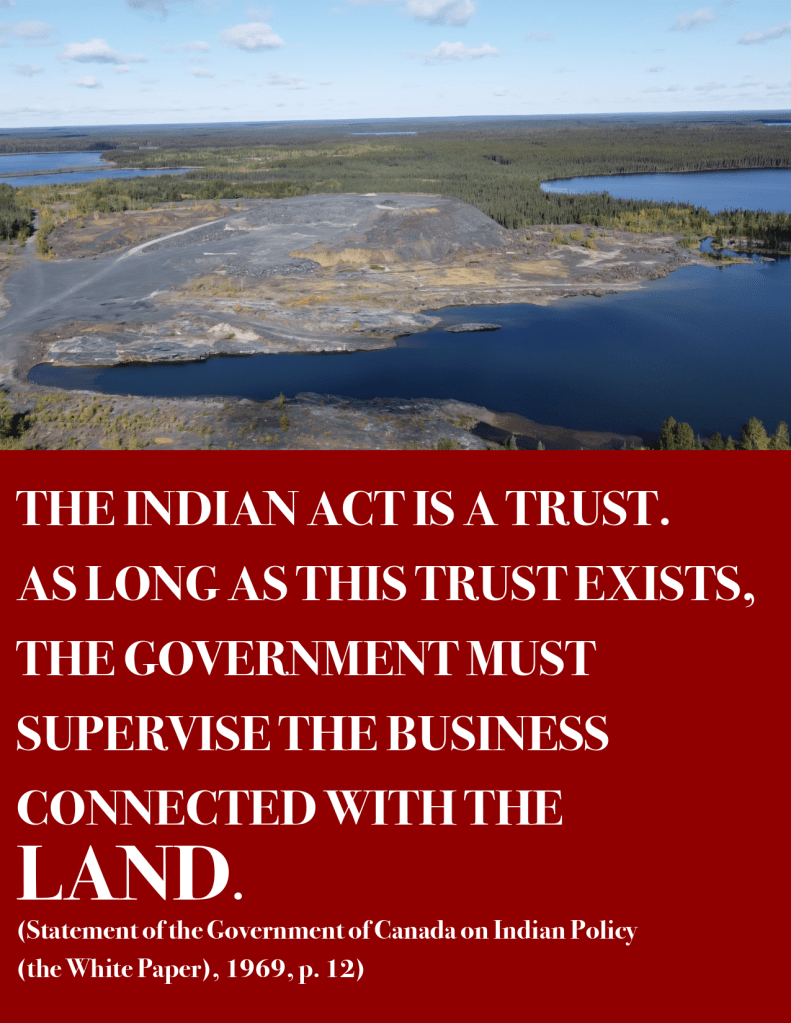
The Indian Act is about the land. This act consolidates all laws related to Native peoples in Canada including Royal Proclamation. The Indian Act is a complete violation of human rights of Native peoples. This Act is not the Indigenous peoples’ Act. It is the land trust.According to Canada’s White Paper of 1969, the Indian Act is the Trust. As long as this trust exists, the government must supervise the business connected with the land. The Indian Act is what the government is doing to divide us. How are we going to have reconciliation while Canada is still failing? Why are we hesitating to talk about the Indian Act abolishment, but on the other side we are wanting our independence back?
Abolishing the Indian Act opens up Native peoples’ path for human rights and creates opportunities of Native prosperity. If the Indian Act is abolished, the Crown will loose control on land. Whoever owns the land governs people.
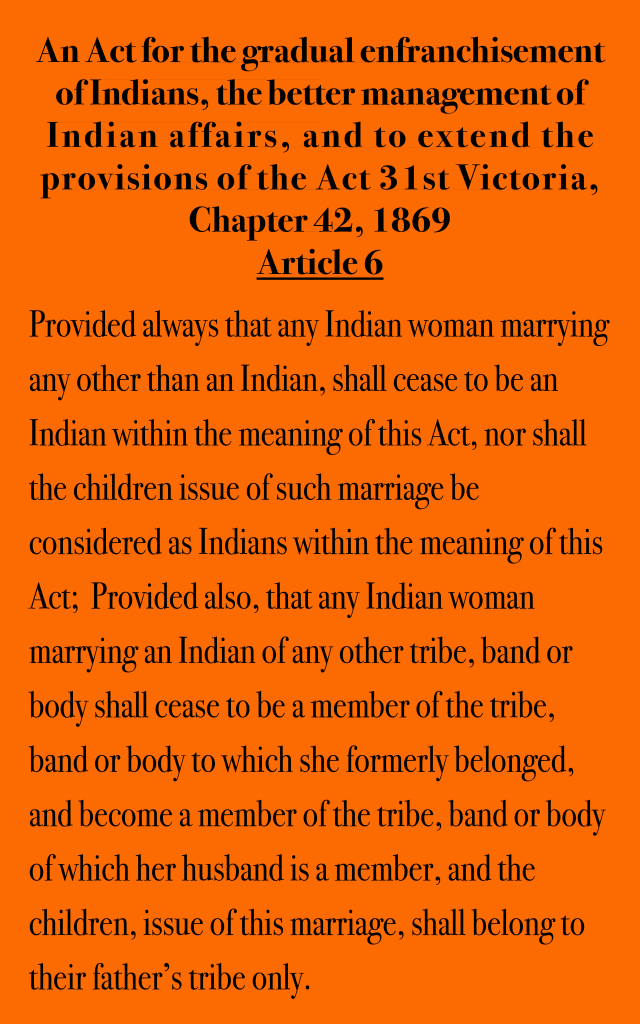
Indian Act 1876
The government of Canada enacted the Indian Act on 12th April, 1876. According to the article 3, “the term “Indian” means
First. Any male person of Indian blood reputed to belong to a particular band;
Secondly. Any child of such person;
Thirdly. Any women who is or was lawfully married to such person:…” The article 12 of the Act defines person as “The term “person” means an individual other than an Indian, unless the context clearly requires another construction.”
Indian Act 1951
According to the Indian Act of 1951, “”Indian” means a person who pursuant to this Act is registered as an Indian or is entitled to be registered as an Indian.” Please download the document below to learn more about Canada’s Indian Act of 1951 and compare it with 1876 version.
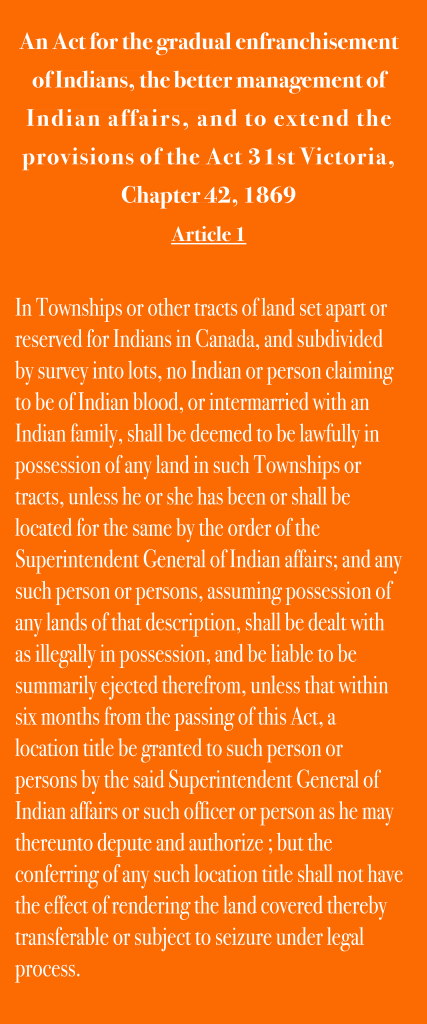
Indian Act 2023
As of today, the Indian Act of Canada defines Indian as “a person who pursuant to this Act is registered as an Indian or is entitled to be registered as an Indian.” Reserve means “a tract of land, the legal title to which is vested in Her Majesty, that has been set apart by Her Majesty for the use and benefit of a band, and except in subsection 18(2), sections 20 to 25, 28, 37, 38, 42, 44, 46, 48 to 51 and 58 to 60 and the regulations made under any of those provisions, includes designated lands.”
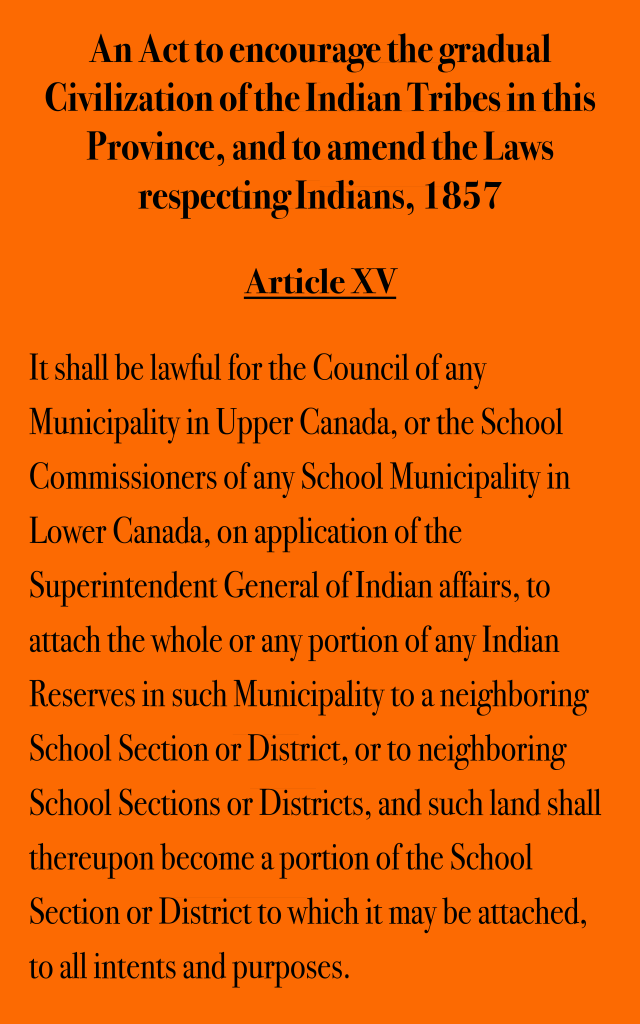
Indian Lands Act 1860
“No person shall sell, distribute, or otherwise dispose of, to any Indian within Lower Canada, or to any other person for their use, any rum or other strong liquors, of what kind or quality soever, or shall knowingly or willingly suffer the same, in any manner, to come to the hands of any Indian:” Article 1 of the Indian Lands Act (An Act respecting Indians and Indian Lands).
“For the purpose of determining what persons are entitled to hold, use or enjoy the lands and other immoveable property belonging to or appropriated to the use of the various tribes bodies of Indians in Lower Canada, the following persons and cheeses of person and non other, shall be considered as Indians belonging to the tribe or body of Indians interested in any such land or immoveable property :
Firstly. All persons of Indian blood, reputed to belong to their particular tribe or body of Indians interested in such lands or immoveable property, and their descendants;
Secondly. All persons residing among such Indians, whose parents were or are, or either of them was or is, descended on either side from Indians, or an Indian reputed to belong to the particular tribe or body of Indians interested in such lands or immoveable property, and the descendants of all such persons;
And
Thirdly. All women lawfully married to any of the persons included in the several classes hereinbefore designated ; the children issue of such marriates, and their descandants. 14, 15 V. c. 59, s.2.” Article 11 of the Indian Lands Act (An Act respecting Indians and Indian Lands).
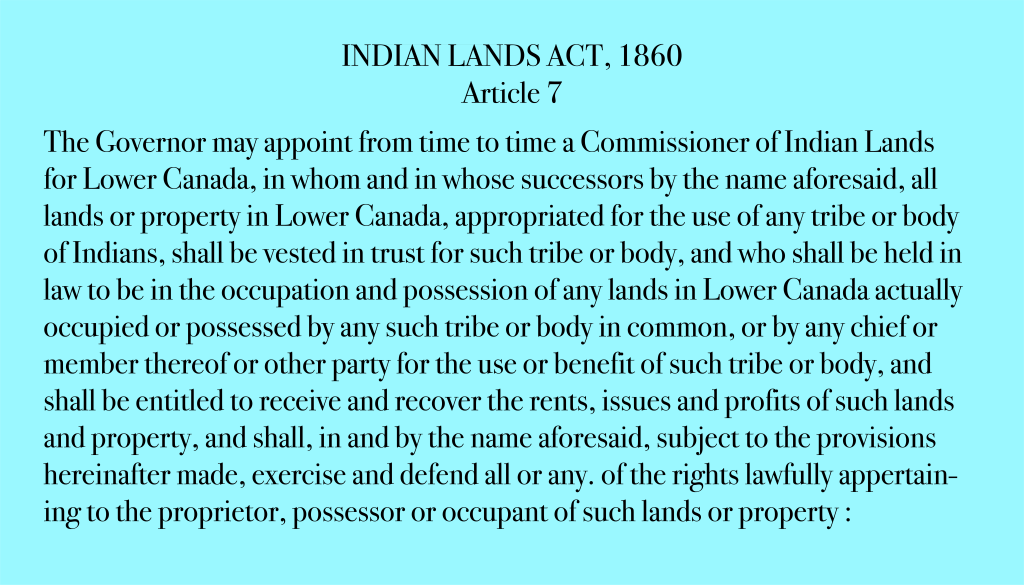

The British North America Act, 1867, and the Canadian Constitution, 1982
Canada was created by the British North America Act, 1867, which was passed in the British Parliament. The Canadian Constitution includes the British North America Act, 1867, and the Constitution Act, 1982. Until 1982, the constitution could only be revised/amended by the British Parliament. The Canadian Constitution defines the executive, legislative, and judicial powers of the Government of Canada. The Section 91 of the Constitution states: “It shall be lawful for the Queen, by and with the Advice and Consent of the Senate and House of Commons, to make Laws for the Peace, Order, and good Government of Canada, … It is hereby declared that (notwithstanding anything in this Act) the exclusive Legislative Authority of the Parliament of Canada extends to all Matters coming within the Classes of Subjects next hereinafter enumerated; that is to say, …” Among the 29 matters listed under the Section 91, the number 24 is “Indians, and Lands reserved for the Indians.”
Statement of the Government of Canada on Indian Policy (the White Paper), 1969
The purpose of the White Paper was not to abolish the Indian Act. The White Paper aimed at transferring the federal control of Native reserves to the provinces and opening up reserve land for lease and sale. The Indian Act puts entire Native land on trust, whereas the White Paper intended to the reserve land only. The White Paper states “Under the existing system, title to reserve land is held either by the Crown in right of Canada or the Crown in right of one of the provinces. Administrative control and legislative authority are, however, vested exclusively in the Government and the Parliament of Canada. It is a trust. As long as this trust exists, the Government, as a trustee, must supervise the business connected with the land (p. 12).”
The Royal Proclamation, 1763
A British person, named as King George III, made a document named as Royal Proclamation public on October 7, 1763. Through this document, the King claimed the land of Native people of Turtle Island as British Territory. Then follow The British North America Act, The Canada Act (Constitution Act), and the Indian Act, to name a few, to systematically capture the Native land. The document proclaimed that the land not ceded to the King and not purchased by the King was reserved for the Indians. This land reserve was a strategy of the king to promote colonialism by protecting British interest and securing their colonies.
Royal proclamation is the doctrine of discovery made first law to colonize Turtle Island. This document still operates in Canada to assert Crown sovereignty.
 Abolish the Indian Act